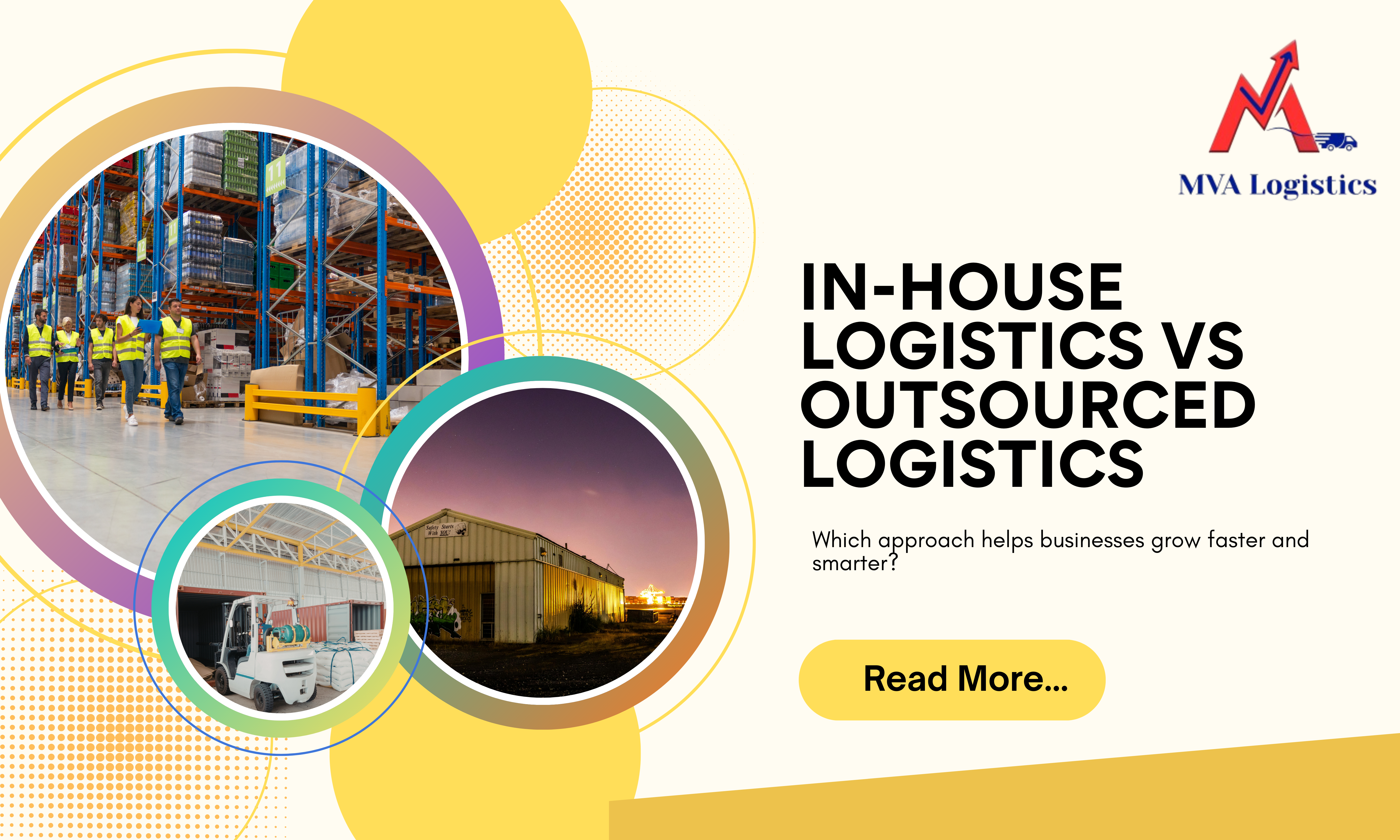
In-House Logistics vs Outsourced Logistics
As businesses grow, managing logistics becomes more complex. What starts with a small warehouse, a few delivery partners, and basic coordination can quickly turn into daily challenges—missed deliveries, rising costs, and unhappy customers. At this stage, many businesses face an important decision: should they continue with in-house logistics or shift to outsourced logistics?
Introduction
As businesses grow, managing logistics becomes more complex. What starts with a small warehouse, a few delivery partners, and basic coordination can quickly turn into daily challenges—missed deliveries, rising costs, and unhappy customers. At this stage, many businesses face an important decision: should they continue with in-house logistics or shift to outsourced logistics?
There is no one-size-fits-all answer, but understanding both models clearly can help businesses choose what works best for them. Let’s break it down in simple terms.
What Is In-House Logistics?
In-house logistics means handling all logistics operations internally. This includes managing warehouses, hiring logistics staff, coordinating transport, tracking inventory, and handling deliveries on your own.
Advantages of in-house logistics:
-
Full control over operations
-
Direct supervision of staff and processes
-
Suitable for very small or highly specialized operations
Challenges of in-house logistics:
-
High fixed costs (warehouse rent, vehicles, salaries)
-
Difficulty scaling operations quickly
-
Requires strong logistics expertise
-
Risk of operational delays if systems fail
As order volumes increase, in-house logistics can become difficult to manage without heavy investment.
What Is Outsourced Logistics?
Outsourced logistics means partnering with a professional logistics service provider who manages logistics operations on your behalf. This includes warehousing, transportation, inventory management, and last-mile delivery.
With outsourced logistics, businesses focus on sales and growth while logistics experts handle the backend operations efficiently.
Why Outsourced Logistics Is Often the Better Choice
1. Cost Efficiency
One of the biggest advantages of outsourced logistics is cost control. Businesses avoid large capital investments in warehouses, vehicles, and manpower. Instead, they pay only for the services they use, making expenses more predictable.
2. Scalability and Flexibility
As demand increases or decreases, outsourced logistics allows businesses to scale operations smoothly. Whether it’s seasonal spikes or business expansion, logistics partners are better equipped to handle volume changes without disruption.
3. Access to Expertise and Technology
Professional logistics providers use advanced systems for inventory tracking, route planning, and delivery monitoring. Businesses benefit from this expertise without investing in expensive technology or training teams internally.
4. Improved Customer Experience
Timely deliveries, proper handling, and accurate tracking directly impact customer satisfaction. With outsourced logistics, businesses can offer reliable delivery experiences that build long-term trust with customers.
In-House vs Outsourced Logistics: A Quick Comparison
| Aspect | In-House Logistics | Outsourced Logistics |
|---|---|---|
| Cost | High fixed costs | Flexible, variable costs |
| Scalability | Limited | Easy to scale |
| Expertise | Depends on internal team | Industry specialists |
| Technology | Expensive to implement | Included in services |
| Focus | Operations-heavy | Growth-focused |
For most growing businesses, outsourced logistics offers more advantages with fewer operational risks.
Why Businesses Prefer MVA Logistics
When choosing outsourced logistics, selecting the right partner matters. MVA Logistics focuses on smooth operations, reliable delivery, and tailored logistics solutions for businesses across industries.
For businesses looking to simplify logistics and focus on growth, partnering with MVA Logistics can help streamline operations without unnecessary complexity. Their service-based approach ensures logistics runs efficiently while businesses stay focused on their core goals.
Conclusion
While in-house logistics may work for small-scale operations, it often becomes challenging as businesses grow. Outsourced logistics provides cost efficiency, scalability, expertise, and better customer experience—all essential for long-term success.
For businesses aiming to reduce operational stress and improve delivery performance, outsourced logistics is a practical and future-ready solution. Choosing a reliable partner like MVA Logistics ensures that logistics supports business growth rather than slowing it down.

Ritika Atwal
Published on 25 Feb, 2026